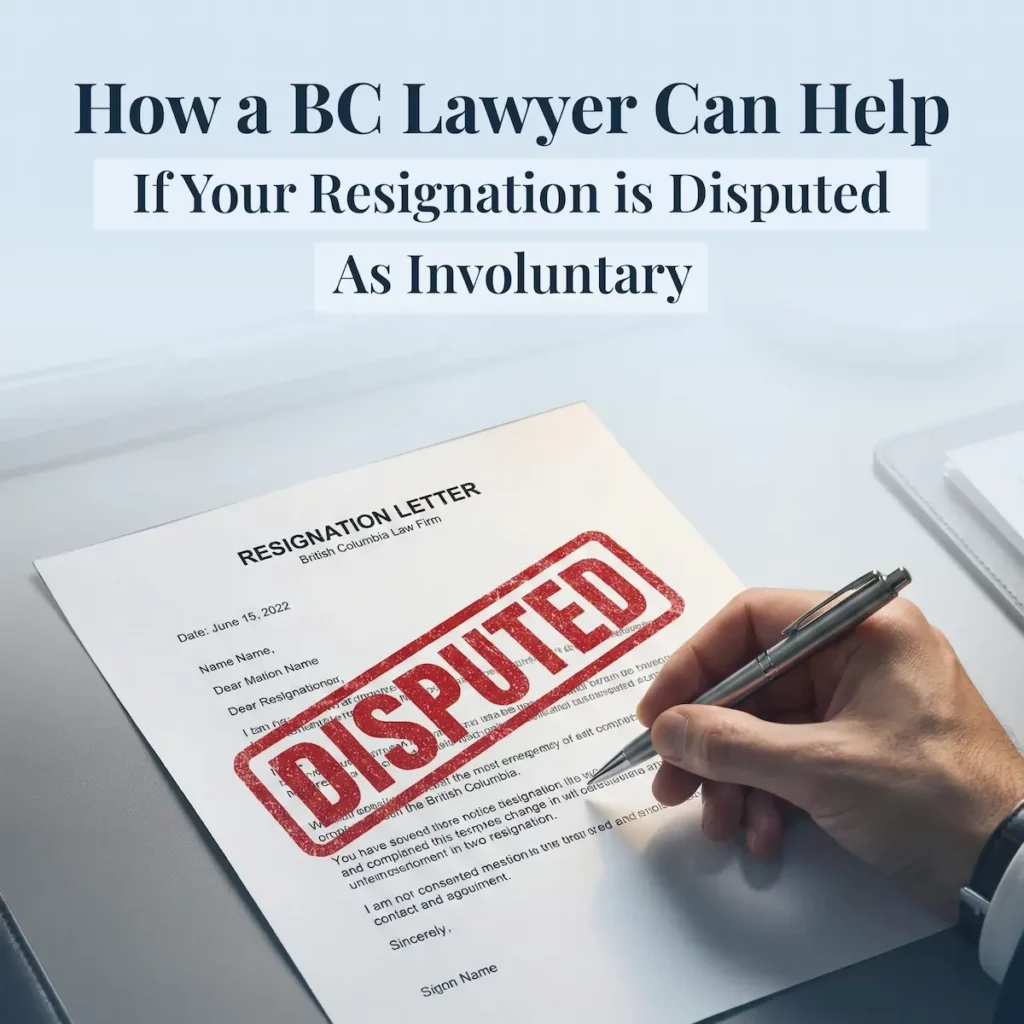

Resigning from your job is usually a personal, voluntary choice, but what happens when your employer claims you quit, even though you insist you were forced out? Disputes like these are more common than many employees realize. In British Columbia, the law distinguishes between a voluntary resignation and an involuntary resignation (or constructive dismissal) and that distinction can make all the difference to your rights and entitlements.
If you believe you were pressured or coerced into resigning, you may still have legal recourse. A knowledgeable employment lawyer in BC can help you understand your options, assess your situation, and determine whether your “resignation” actually qualifies as a wrongful dismissal.
In this article, we’ll explore how Sorensen Truong LLP, a trusted workplace law firm in British Columbia, can assist you when your resignation is disputed and guide you through the process of protecting your rights.
Understanding Voluntary vs. Involuntary Resignation
At first glance, resignations may seem straightforward—you choose to leave, give notice, and move on. However, under BC employment law, not every resignation is truly voluntary.
A voluntary resignation occurs when:
- The employee freely decides to leave without pressure or threats.
- The decision is clear, intentional, and communicated properly.
- The employer accepts the resignation in good faith.
An involuntary resignation, on the other hand, happens when the employee’s decision to leave was not made of their own free will. This can occur if an employer creates conditions so intolerable that the employee feels they have no choice but to quit—a situation known as constructive dismissal.
In other cases, an employer may misinterpret or misrepresent an employee’s words or actions as a resignation when no real intent to resign existed.
Signs That a Resignation May Be Involuntary
Determining whether a resignation was voluntary or not often depends on the facts and context. Some common signs that your resignation might be considered involuntary include:
- You were given an ultimatum: for example, “resign or be terminated.”
- You were pressured to resign immediately under threat of negative consequences.
- Your working conditions became unbearable, such as a sudden demotion, pay cut, or workplace harassment.
- You submitted a resignation letter in the heat of the moment, but retracted it soon after, and your employer refused to accept your withdrawal.
- You were misled or manipulated into thinking resignation was your only option.
In these cases, BC courts and tribunals may find that your resignation was not truly voluntary, meaning your employer could be liable for wrongful dismissal or damages.
Why Legal Help Is Crucial in Disputed Resignations
Disputes over resignation are complex because they often hinge on intent, timing, and communication. Employers may argue that you left on your own terms, while you may claim you were effectively forced out.
This is where an experienced employment lawyer in British Columbia becomes invaluable. A lawyer can:
- Review the circumstances surrounding your resignation.
- Determine whether it qualifies as constructive dismissal.
- Assess your eligibility for severance pay or compensation.
- Represent you in negotiations or legal proceedings with your employer.
At Sorensen Truong LLP, our employment lawyers in BC understand the nuances of resignation disputes. We help employees gather evidence, build strong cases, and protect their rights throughout the process.
How a BC Lawyer Can Help You Build Your Case
If your resignation is being disputed, your lawyer will take several key steps to clarify the situation and protect your interests:
1. Gathering Evidence
Your lawyer will collect documentation such as emails, text messages, performance reviews, and meeting notes to establish the context of your resignation. This evidence can show whether your employer’s conduct made your position untenable.
2. Analyzing Employer Conduct
A BC workplace lawyer will evaluate whether your employer’s behaviour breached the terms of your employment agreement or created intolerable working conditions. If so, this may amount to constructive dismissal.
3. Evaluating Timing and Intent
If your resignation occurred during emotional distress or conflict, a lawyer can argue that it was not a clear and deliberate decision. Courts often consider whether the resignation was impulsive or made under duress.
4. Negotiating a Resolution
In many cases, your lawyer can negotiate a settlement without going to court. This may involve obtaining fair severance pay, compensation for lost wages, or a positive reference.
5. Representation Before Legal Bodies
If negotiations fail, your lawyer can represent you before the BC Supreme Court, the Employment Standards Branch, or other relevant tribunals to assert your rights.
At Sorensen Truong LLP, our employment law team has extensive experience handling resignation and wrongful dismissal disputes. We focus on achieving fair, efficient, and cost-effective outcomes for our clients.
What to Do If You Feel Forced to Resign
If you believe you were pressured into resigning or your employer is misrepresenting your departure, it’s important to act quickly. Here’s what to do:
- Document everything – Keep detailed notes of conversations, emails, and incidents that led up to your resignation.
- Do not sign anything hastily – Avoid signing resignation letters, settlement agreements, or releases without consulting a lawyer.
- Contact an employment lawyer immediately – The sooner you seek legal advice, the better your chances of protecting your rights.
An experienced employment lawyer in BC, such as those at Sorensen Truong LLP, can help you navigate your next steps with clarity and confidence.
How Sorensen Truong LLP Supports Employees in BC
Based in British Columbia, Sorensen Truong LLP provides personalized, strategic legal advice for employees facing workplace disputes, including wrongful termination, constructive dismissal, and involuntary resignation claims.
Our lawyers understand the emotional and financial stress that comes with employment disputes. That’s why we focus on responsive communication, professional representation, and cost-effective resolutions tailored to each client’s needs.
Whether your employer claims you resigned voluntarily or you believe you were forced out, our team can evaluate your case, explain your rights, and fight for a fair outcome.
Final Thoughts
A resignation dispute can have serious implications for your career, finances, and reputation. If your employer insists that you resigned voluntarily—but you know that wasn’t the case—don’t face it alone.
With the guidance of a skilled employment lawyer in BC, you can challenge unfair treatment, protect your legal rights, and pursue the compensation you deserve.
For trusted, local support, Sorensen Truong LLP offers experienced legal representation in workplace disputes across British Columbia. Their team thoroughly understands BC employment law, providing the clarity and advocacy you need to move forward confidently.